

The cough is one of the most loved and hated things every pot smoker has dealt with. Smokers claim that the cough makes you more high and makes you high faster. Other people claim it makes no difference. Either side agrees that the cough of smoking isn’t all that pleasant. The truth is that while it may give you a feeling of being more high, it doesn’t actually impact your high.
Here are some sources that can help back up that claim to your non-believer friends:
Chemistry, Metabolism, and Toxicology of Cannabis: Clinical Implications
Coughing and its relationship to getting higher: What does the science say?
Since we know that coughing isn’t necessary to get you high and doesn’t even help your high come faster or come on stronger, what can we do about it? The obvious answer is to filter your smoke. There are a number of cannabis filters on the market, but they have some drawbacks. We will explore what options are on the market today and talk about a new cannabis invention, and if it actually works.
Cardboard Crutch Filter Tip: Better than nothing
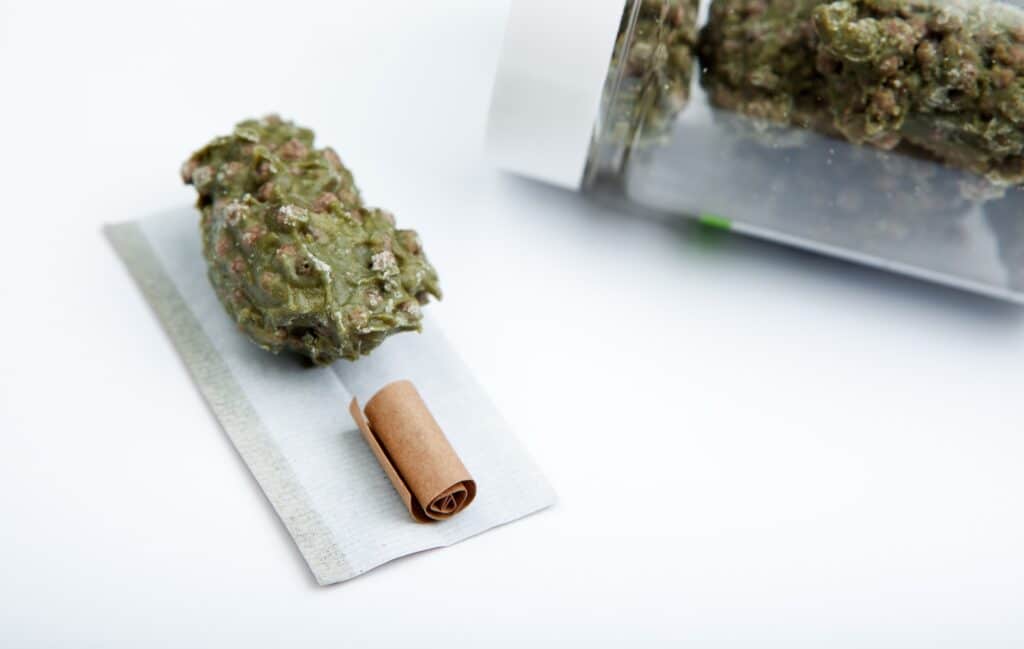
The OG of joint filters is the rolled-up or folded piece of cardboard. These are an awesome solution to a simple problem: how do I keep the hot burning weed from touching my lips? It is a spacer to keep the weed away from the tip of the joint. It doesn’t filter your joint in any way, which means you don’t lose your high, but it means you also get those pesky Scooby Snacks, or bits of ember. They come with many packs of paper or can be obtained by ripping up a postcard from Grandma. (If you know, you know.)
Glass Joint Filter Tip: Pretty but problematic
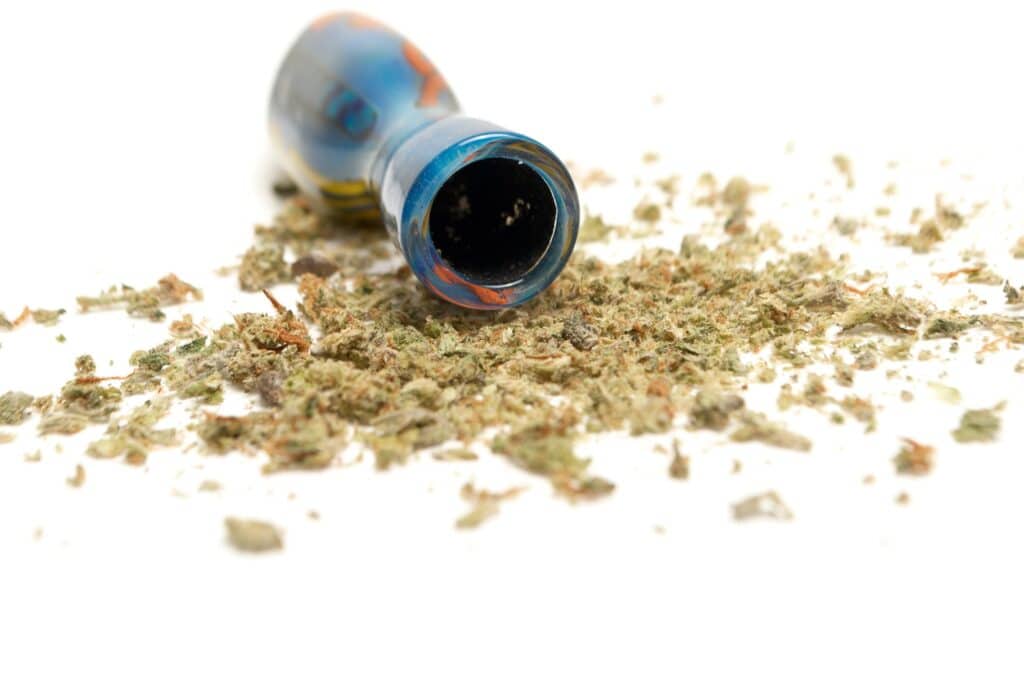
Glass filter tips are gaining an enormous amount of traction in the weed-smoking world. There is a good reason: they look cool. We all know how smoking looks cool (don’t lie, it does), but these come at a cost. The cheap ones are $7, but the nice ones can be $85 for a single tip!!! The cheap ones are not much better than a cardboard crutch, but the nice ones have spirals inside that help the glass absorb the heat from the smoke, allowing it to cool much better than a cardboard crutch. They don’t filter any smoke but have small holes which do stop some larger bits of ash or debris from being inhaled. Glass tips can be reused many times, BUT that all stops once you drop one. Unfortunately, marijuana does not help with clumsiness; it actually increases the chance you’ll drop and break it. The last issue we need to talk about is cleaning. The cheaper ones are easier to clean, but the nicer ones are a bit of a pain. You can’t fit anything in those small spiral holes, so you need to rely on rubbing alcohol or other cleaning products to keep them working properly.
Activated Carbon: Smooth, but at a cost
Activated carbon filters are a very cool invention that was put into a filter. Activated carbon is essentially charcoal that has gone through a process to maximize the number of pores that it has. This means it is like a super sponge, and it can pull harsh chemicals, odors, and VOCs right out of the air as it is passed through it. This is why it is used in the filtration of drinking water and air purifiers. Unfortunately, those same properties don’t work in favor of THC. The cannabinoids in the smoke of a marijuana joint are VOCs (Volatile organic compounds), and an activated carbon filter will remove VOCs from the air passed through it. This means that the smoke coming out of the end of the filter is smoother and tastes less harsh; it also has fewer cannabinoids in it. This means you will not get as high from smoking a joint with an activated carbon filter as without. Some people will be happy to make that trade. The manufacturers say the smoother smoke is worth the loss of THC. Some people would be willing to make that trade, many smokers, but don’t like that they lose the taste of the weed. This is a personal preference that only you can answer for yourself.
The other issue with activated carbon filters is that they don’t work in cold weather; they clog up, and you cannot pull through them if they get too cold. This is a known issue that the manufacturers try to gloss over, but it is a real pain if you live in a cold-weather climate. The environmental impact of these filters is good but not great. They are usually made from sustainable materials and are biodegradable but not compostable.
Cotton: Absorbent to a fault
Cotton filters were originally for tobacco cigarettes. Cotton-like activated charcoal is a great absorber. It isn’t as powerful as activated carbon, but as you all know from paper towel commercials, it is a great “picker-upper”. This means that it has the same issue as activated carbon and pulls the VOCs or cannabinoids right out of the smoke. The other issue with using a cotton cigarette filter is that it is hard to pull through. Having to pull hard on a blunt is not a pleasant experience, and using this without alternation isn’t recommended. One upside of cotton filters is that they are usually sustainably made and are biodegradable, but not compostable.
Cellulose Acetate: Microplastic mistake
Acetate filters try to fool you by putting that “cellulose” in front, but make no mistake: cellulose acetate filters contain microplastics. These filters are derived from natural cellulose(wood pulp). The process they go through makes it a man-made material and cellulose acetate microfibers, which are considered a microplastic. This is what the cigarette butts that you see all over the ground are made of. They do not break down and are a huge source of microplastics all over the world. Breathing through these filters isn’t a better option either. One NIH study claims that just by using a cellulose acetate filter, you are ingesting microplastics. If that wasn’t bad enough, the cellulose acetate filters ALSO absorb cannabinoids in the air. This makes these filters the worst of all options on this list for use in a joint. They are bad for you, bad for the environment, and don’t help you get high.
The roach: Just don’t use them.
Jiraffe Joint Filter: Myth or Legend?
The Jiraffe Filter is the first filter to actually solve the issues we have talked about so far. It does not absorb cannabinoids in the smoke, it doesn’t alter the taste, and it filters the large particles in the smoke. The Jiraffe Filter is also sustainably made and biodegradable, and compostable at a cost-effective price. These seem too good to be true, so how does it work? The filter is made from cellulose, NOT cellulose acetate (See above why that is bad). Cellulose is simply the structure of fibers that make up trees and plants. It is the most abundant organic compound on Earth. The wood fibers are ground up incredibly finely, then pressed together using only heat and pressure. This is important because other cellulose products like MDF or plywood, which use a very similar process, this one is done without any glues or adhesives. This means that the compressed cellulose filter media is very fragile and can break apart simply by touching it. It is thinner than tissue paper at this point. It then gets bundled up and wrapped tightly to make sure it won’t fall apart. It is packed to a specific density to ensure that air can still pass through while still trapping any larger particles suspended in the smoke. The other benefit of the heat and pressure is that the cellulose media is so dense that it no longer becomes an effective absorber of VOCs. This means that cannabinoids are not effectively absorbed by the filter media.
Here is a breakdown of each joint filter tips type with a grade and explanation of the grade (Hover each cell to view more detailed info):
| Filter | Cost | THC Filtration | Smoke Filtration | Taste Impact | Cooling | Usability | Eco Factor | Avg. Grade |
| Cardboard Crutch |
$$
$0.09
|
A
None
|
F
None
|
A
None
|
C
Very slight
|
A
No issue
|
A
Sustainably Made, Biodegradable, Compostable
|
3 |
| Glass |
$$$$
$40.00
|
A
None
|
C
Small holes provide filtration, but large center hole does not
|
A
None
|
A
Very good
|
C
Heavy and slippery. Small holes can clog
|
B
Sustainably Made, Recyclable, reusable
|
3.2 |
| Activated Carbon |
$$
$0.30
|
F
Very Absorbent
|
A
Much cleaner smoke
|
D
Very high
|
B
Some
|
B
Cold weather
|
B
Sustainably Made, Biodegradable
|
2.3 |
| Cotton |
$
$0.05
|
D
Absorbent
|
A
Very high filtration
|
B
Some but not much
|
C
Very slight
|
C
Hard to pull through, very squishy
|
B
Sustainably Made, Biodegradable
|
2.5 |
| Acetate |
$
$0.03
|
D
Absorbent
|
A
Much cleaner smoke
|
B
Some people say they can taste the acetate
|
C
Very slight
|
A
No issue
|
F
Contains Microplastics
|
2.3 |
| Jiraffe Filter |
$$
$0.16
|
B
Minimal absorption
|
A
Much cleaner smoke
|
A
None
|
C
Very slight
|
A
No issue
|
A
Sustainably Made, Biodegradable, Compostable
|
3.5 |
The Roach
Smoking isn’t healthy, and filtering your joint won’t make it healthy. But if you’re going to smoke, why not do it in the best way possible? Skip the acetate filters entirely—they’re bad for you and the environment. Choose the filter that matches your priorities: Jiraffe Filters for smooth smoke without sacrificing your high, glass tips for the coolest smoke and reusability, or stick with cardboard crutches if you prefer simplicity.
Ready to try the difference? Check out our filters, rolling papers, and pre-rolled cones.